Every review you don’t get dies in the gap between intention and action. The customer says “of course I’ll leave you a review!” — and then has to find your business on Google, spell its name right, scroll past the ads, find the reviews panel, and remember why they cared. Most don’t make it. Whatever closes that gap fastest wins.
The two standard tools are a printed QR code and an NFC card. Both encode the same thing — a direct link to your Google review form — so the comparison is really about friction, reliability and how the ask feels.
The interaction, step by step
Count the actual steps a customer performs:
- QR code: take out phone → open camera → aim and hold steady → wait for detection → tap the small link banner → land on the review form. Five to six deliberate actions, plus lighting, distance and print quality all have to cooperate.
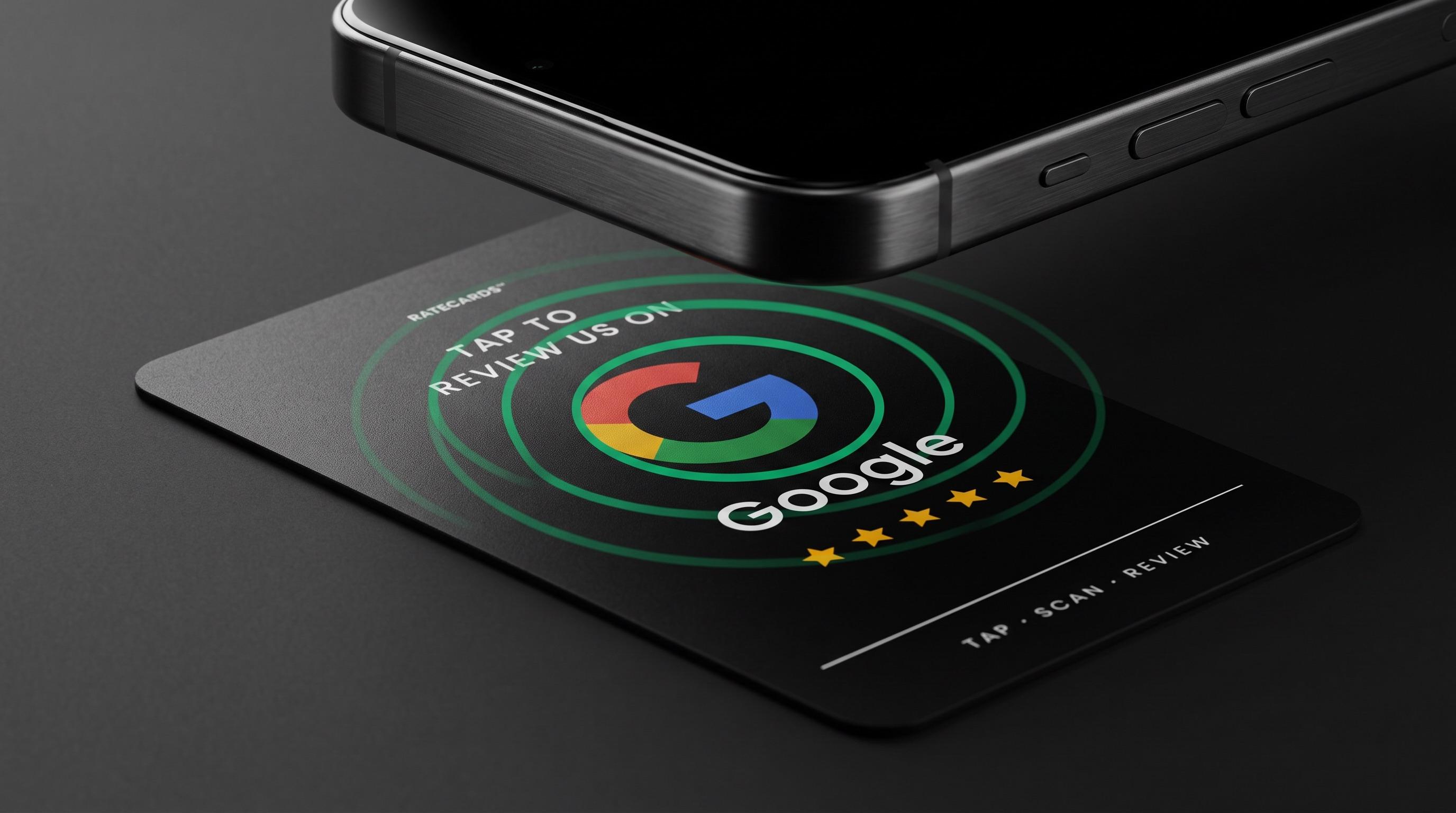
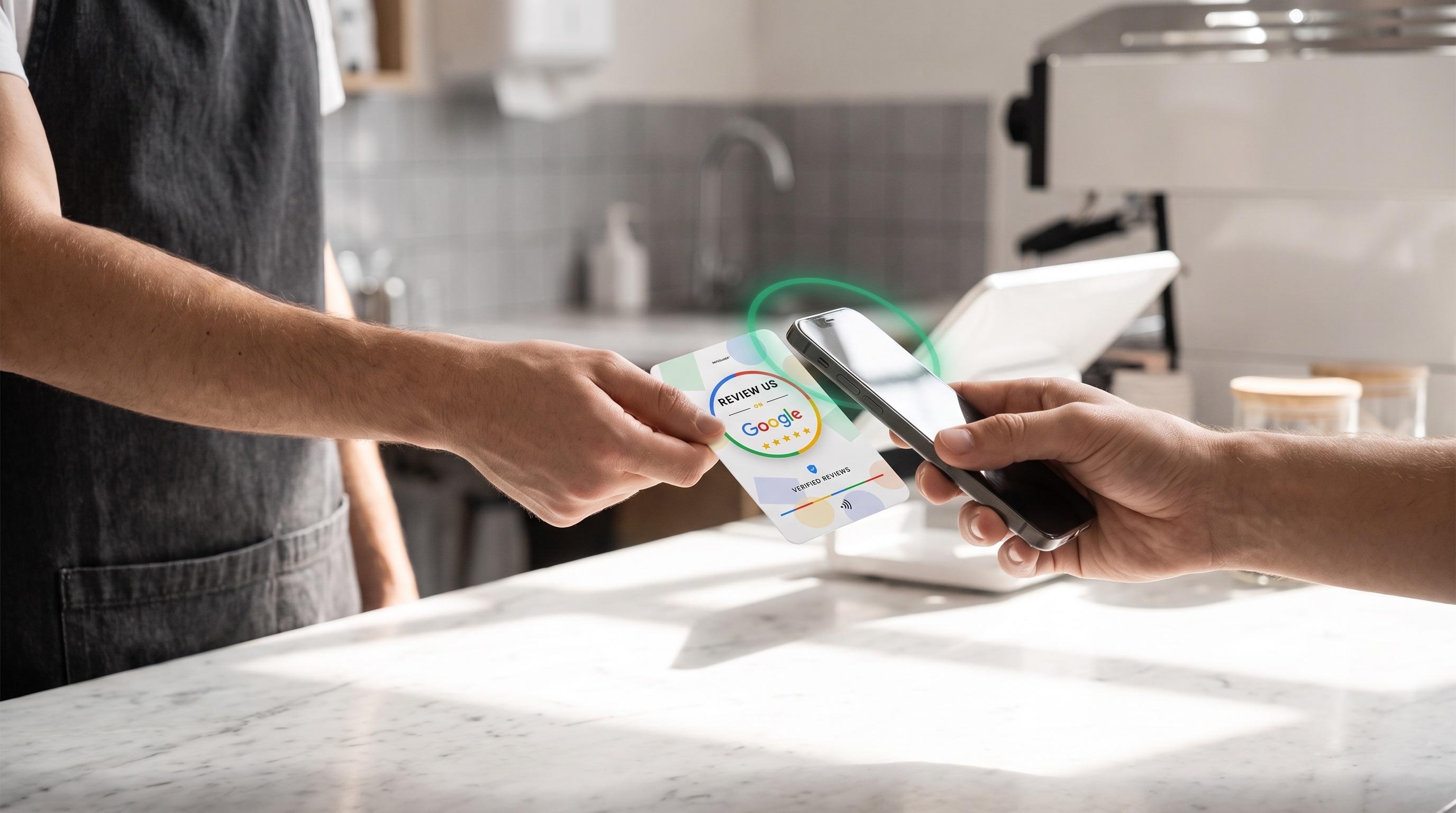
- NFC card: hold the phone anywhere near the card → tap the notification. The chip does the rest. Two actions, works in a dark restaurant, works with a cracked screen, works when the card is worn.
The psychology is bigger than the tech
A QR code on a table tent is passive — it sits in the environment with the menus and the marketing, easy to tune out. Handing someone a card is an event. It creates a small social moment: your staff member is personally asking, the customer is holding something physical, and the tap gives instant feedback that it worked. That framing — a person asking a person, at the moment the service impression peaks — is what actually converts.
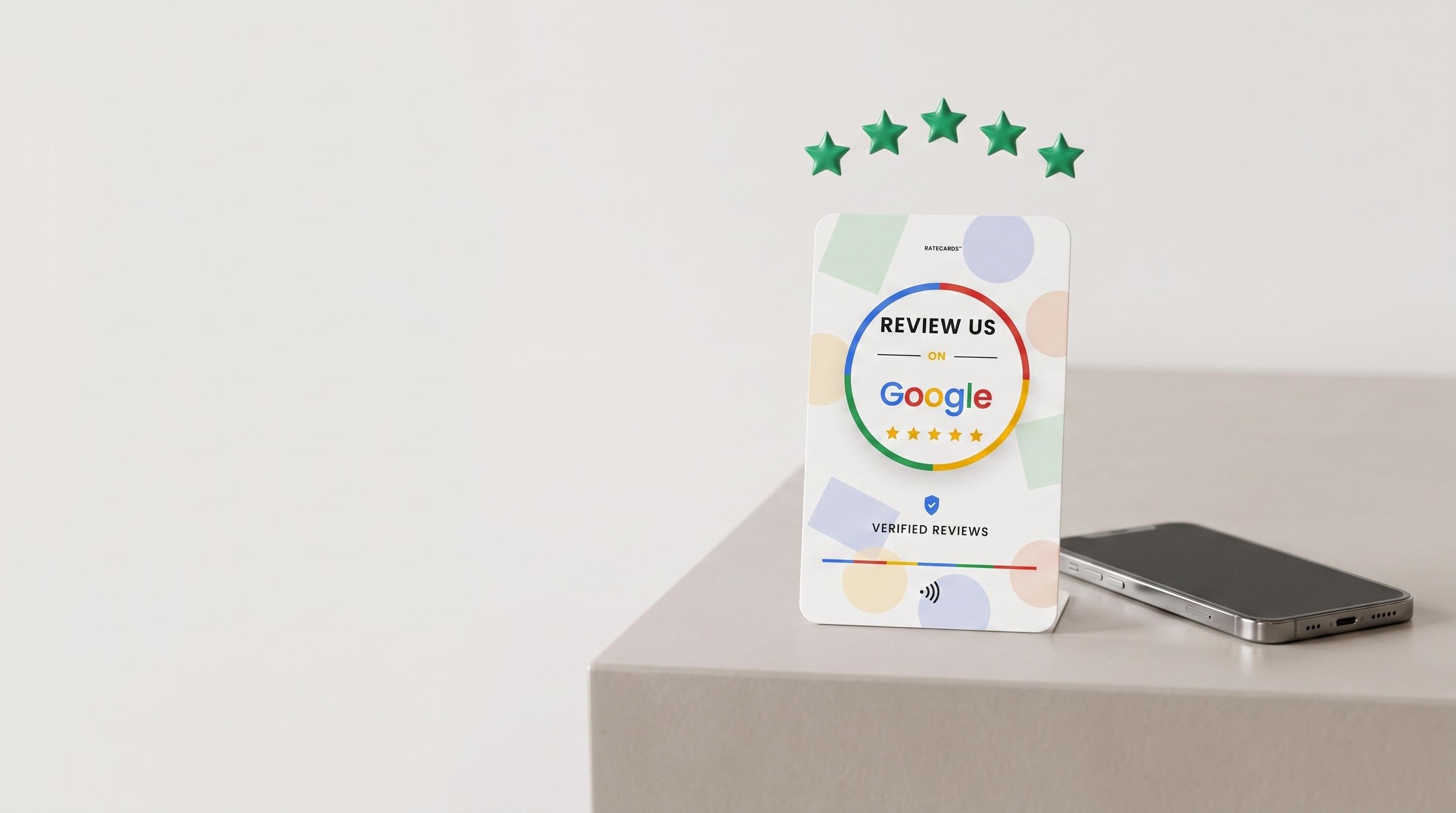
There’s also a durability difference in how the ask scales. A QR poster works once per glance; a card in a busy café gets tapped, handed back and tapped again all day, and never needs reprinting when your link changes — with RATECARDS the chip points at a permanent URL you can redirect from the dashboard at any time.
Where QR codes still make sense
QR isn’t obsolete. It’s the right tool where NFC physically can’t reach: printed receipts, packaging inserts, delivery bags, a poster read from two metres away, or email signatures. Older phones without NFC (increasingly rare, but real) can also fall back to scanning.
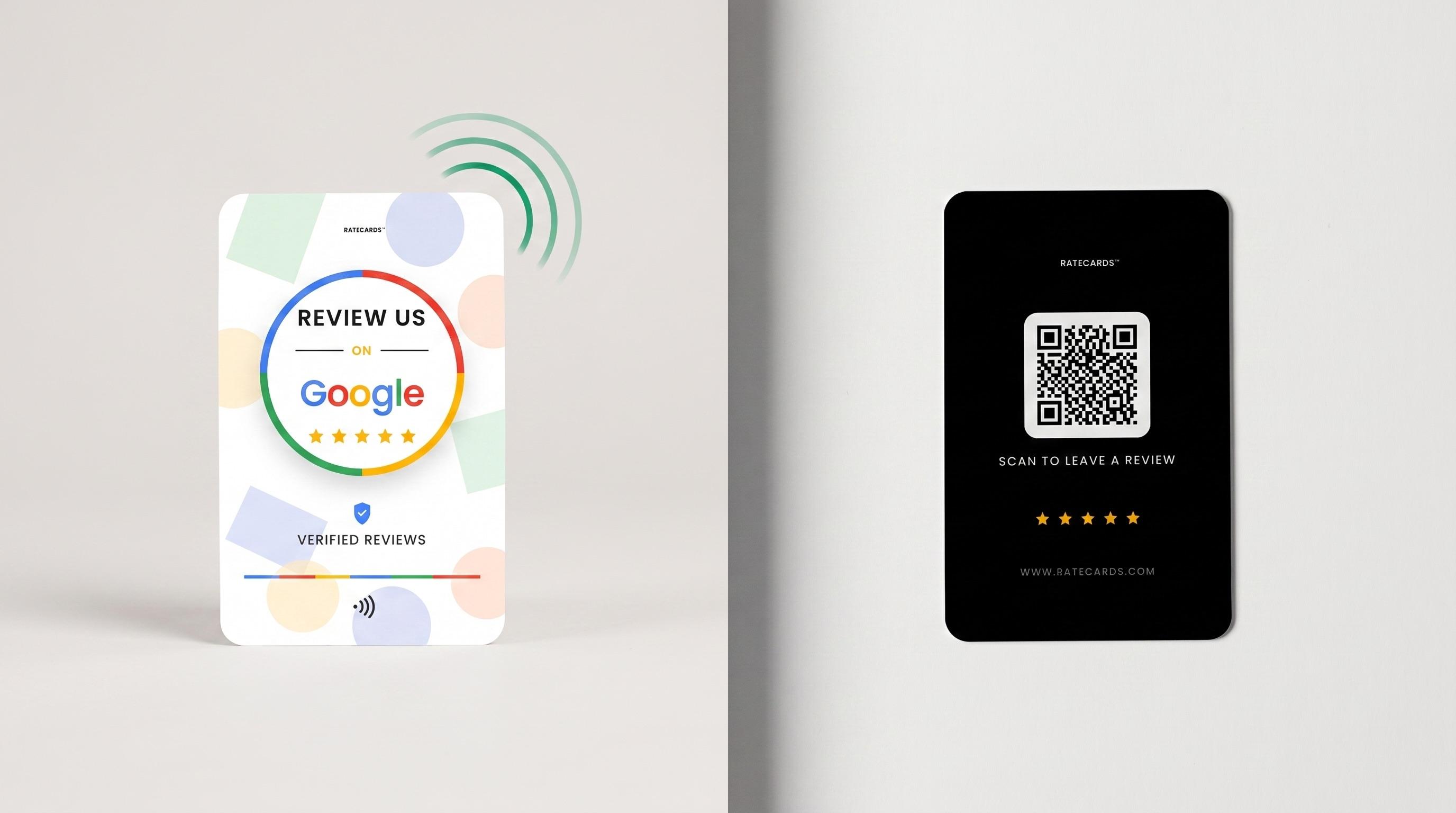
That’s why our cards carry both — the NFC chip for the tap, a QR fallback on the card face for everything else. The point isn’t tribal loyalty to a technology; it’s removing every possible reason for the customer not to follow through.
The bottom line
If the review ask lives in your environment (posters, receipts, packaging), QR is fine. If it lives in a human interaction — a waiter, a receptionist, a technician finishing a job — NFC converts the goodwill of that moment before it evaporates. For most service businesses, that in-person moment is where nearly all realistic reviews come from, which is why the card wins in practice.