Type “dentist near me” or “best brunch in Dubai Marina” into Google and the first thing you see isn’t a website — it’s the map pack: three businesses, each with a star rating and a review count. For most local businesses in the GCC, that box is where the majority of new customers make their shortlist.
Google is explicit about what feeds it. Local results are ranked on three things: relevance, distance and prominence — and Google’s own guidance states that review count and review score factor into prominence. You can’t move your shop closer to the searcher, and relevance is mostly a matter of filling out your Business Profile properly. Reviews are the lever you actually control week to week.
The three review signals that matter
When people talk about “getting more reviews” they usually mean the star rating. In practice three separate signals are in play, and the businesses that win the map pack tend to be strong on all of them:
- Rating — the headline number. It matters most at the thresholds: searchers routinely filter to 4.0+, and Google's own tools let them. Sitting at 3.9 versus 4.1 is the difference between existing and not existing for those searches.
- Volume — a 4.8 from 12 reviews and a 4.8 from 900 reviews are not the same business in a customer's eyes, or in Google's. Volume is proof the rating isn't luck.
- Recency — a wall of glowing reviews from three years ago reads as a business past its prime. A steady drip of fresh reviews signals a business that's good right now.
Why the GCC market is unusually review-driven
Dubai, Riyadh, Doha and the wider Gulf have some of the highest smartphone penetration and Google Maps usage anywhere. Add a population where a huge share of residents are newcomers — expats and tourists with no childhood favourites, no inherited word of mouth — and reviews stop being a nice-to-have. They are the word of mouth.
Tourism sharpens this further. A visitor choosing a restaurant on The Palm has exactly one research tool in their hand, and it is showing them your rating next to your competitor’s. The same is true for hotels on booking engines, clinics chosen by newly arrived residents, and home-service companies found entirely through search.
The recency problem nobody budgets for
Most businesses treat reviews as a campaign: a push when they open, a scramble after a bad month. But because recency is a signal, reviews behave like fitness, not like a diploma — you don’t earn them once, you maintain them. The operational question isn’t “how do we get 100 reviews?”, it’s “how do we make asking part of every single service interaction, forever, without nagging staff about it?”
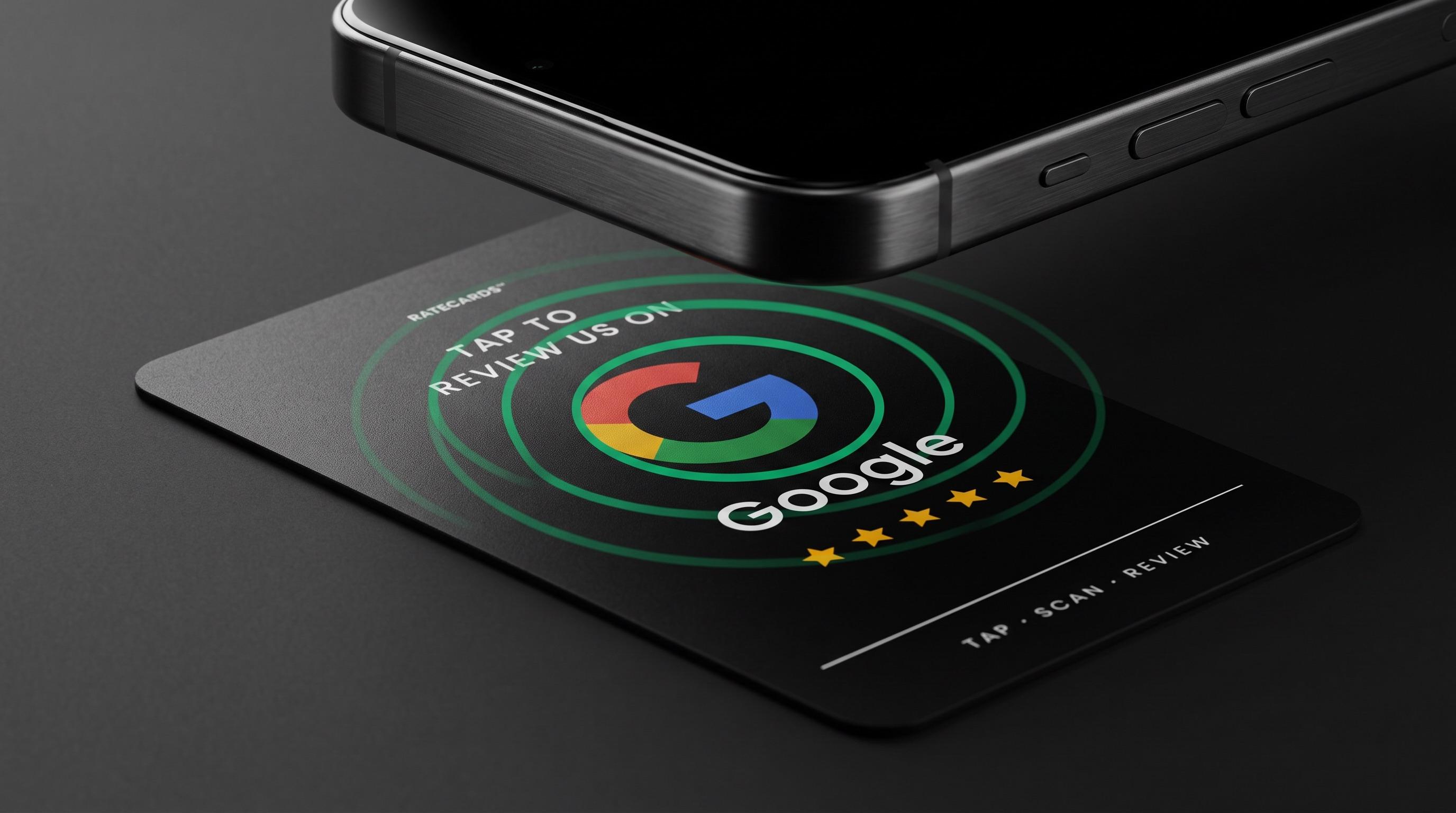
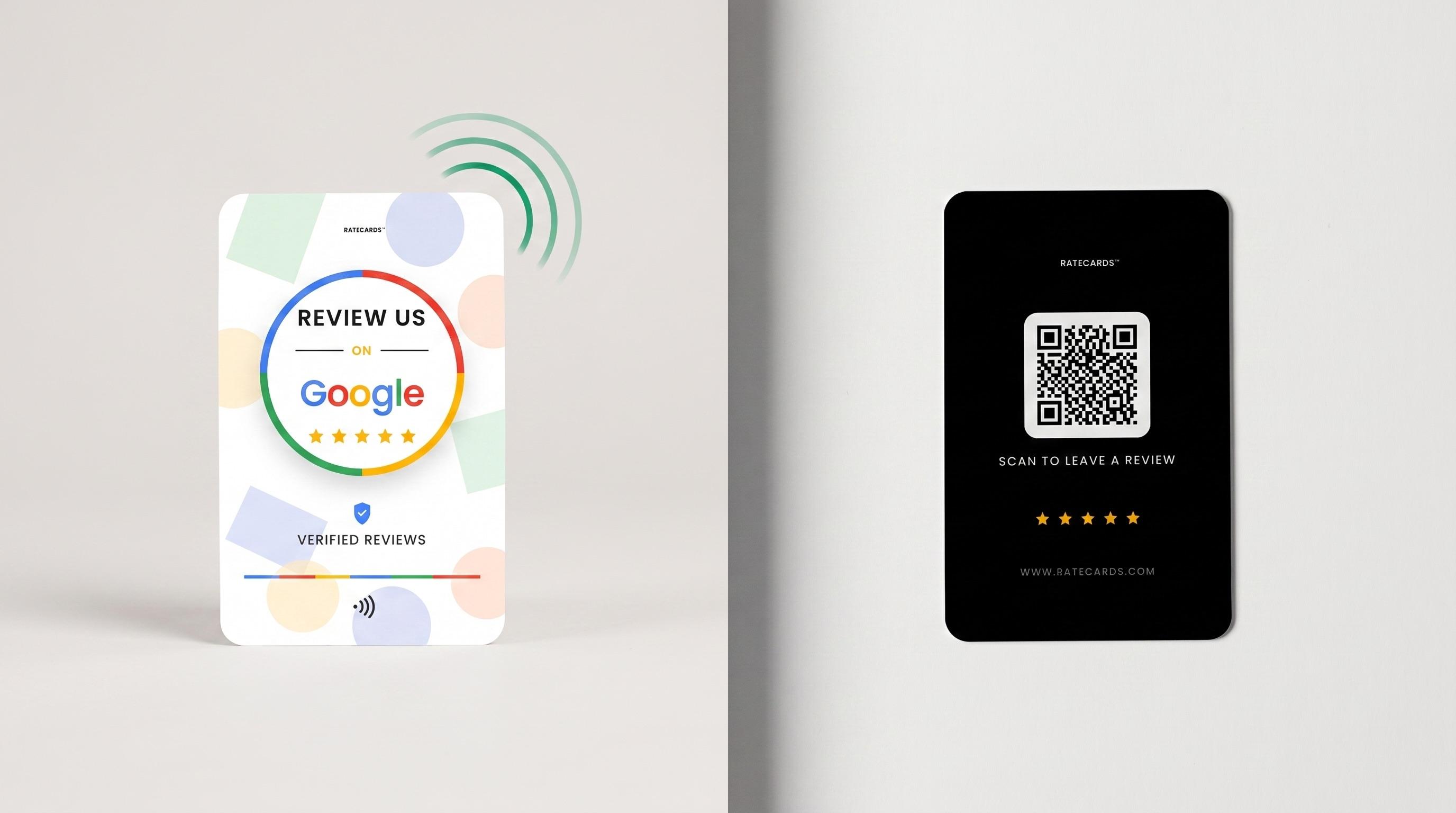
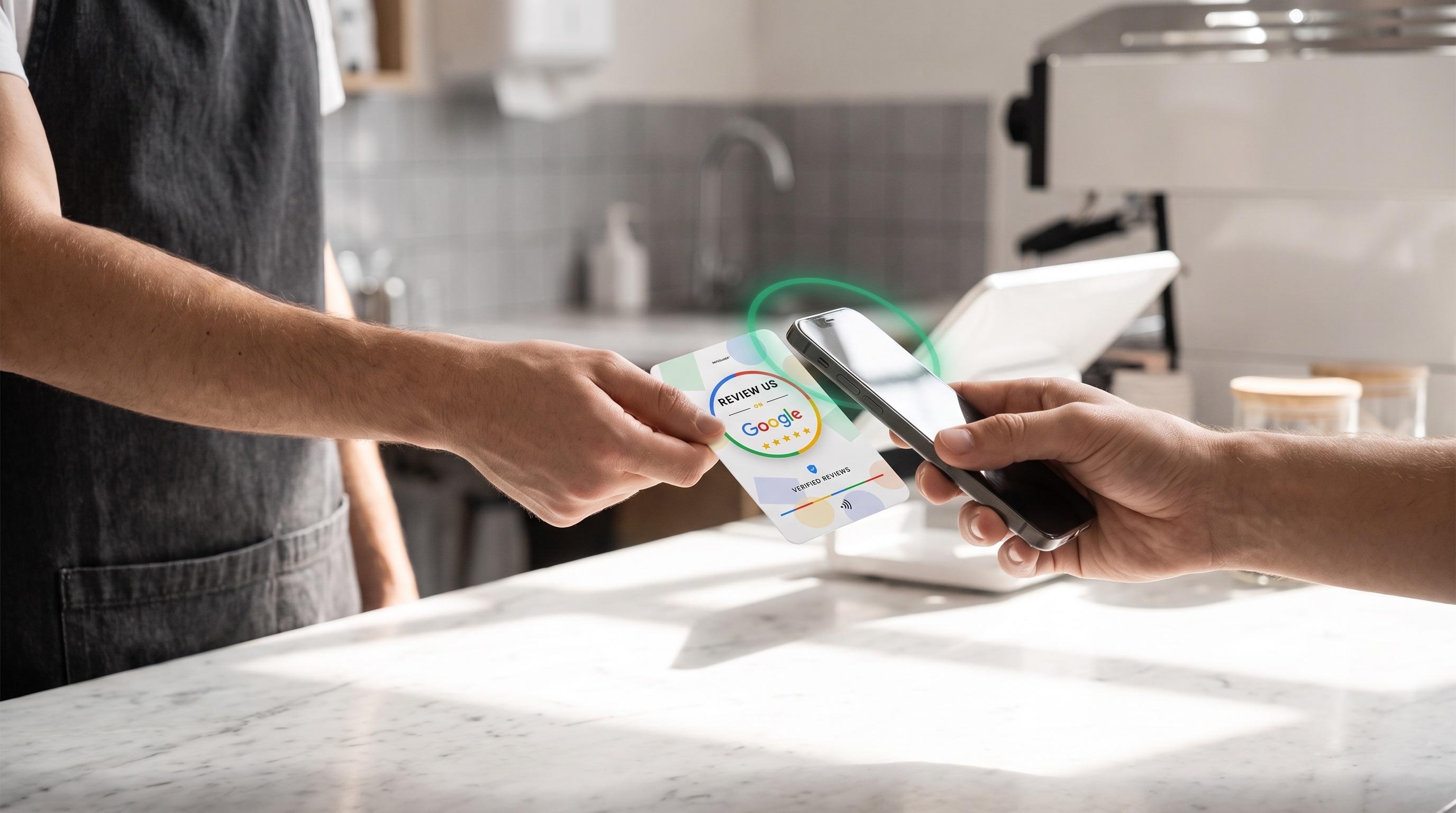
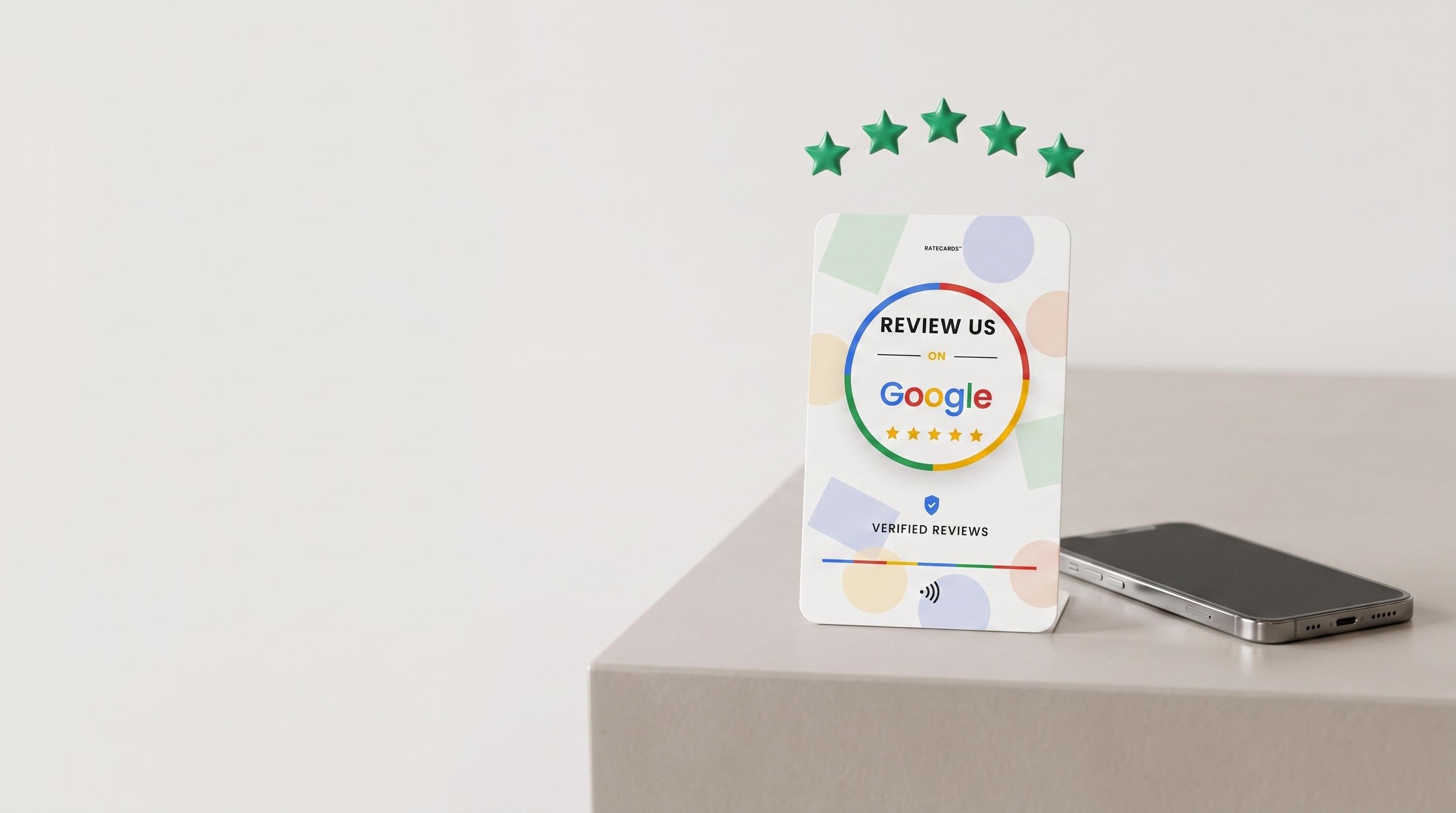
That’s the problem tap-to-review hardware solves. A card at the counter or on the table turns the ask into a two-second physical gesture — the customer taps their phone, the review form opens, done. No URL to read out, no QR hunt, no follow-up email that arrives after the goodwill has faded.
Where to start
If your rating is healthy but your volume is thin, put the ask at the moment of peak satisfaction — the handover, the checkout, the goodbye — and make it effortless. If your rating is below 4.0, fix the operational issues generating the bad reviews first; more volume just averages you toward your true service level.
And whatever you do, ask everyone. Cherry-picking who gets asked (“review gating”) violates Google’s policies and can get reviews wiped. The businesses that dominate the map pack in five years will be the ones that made honest asking a habit in year one.